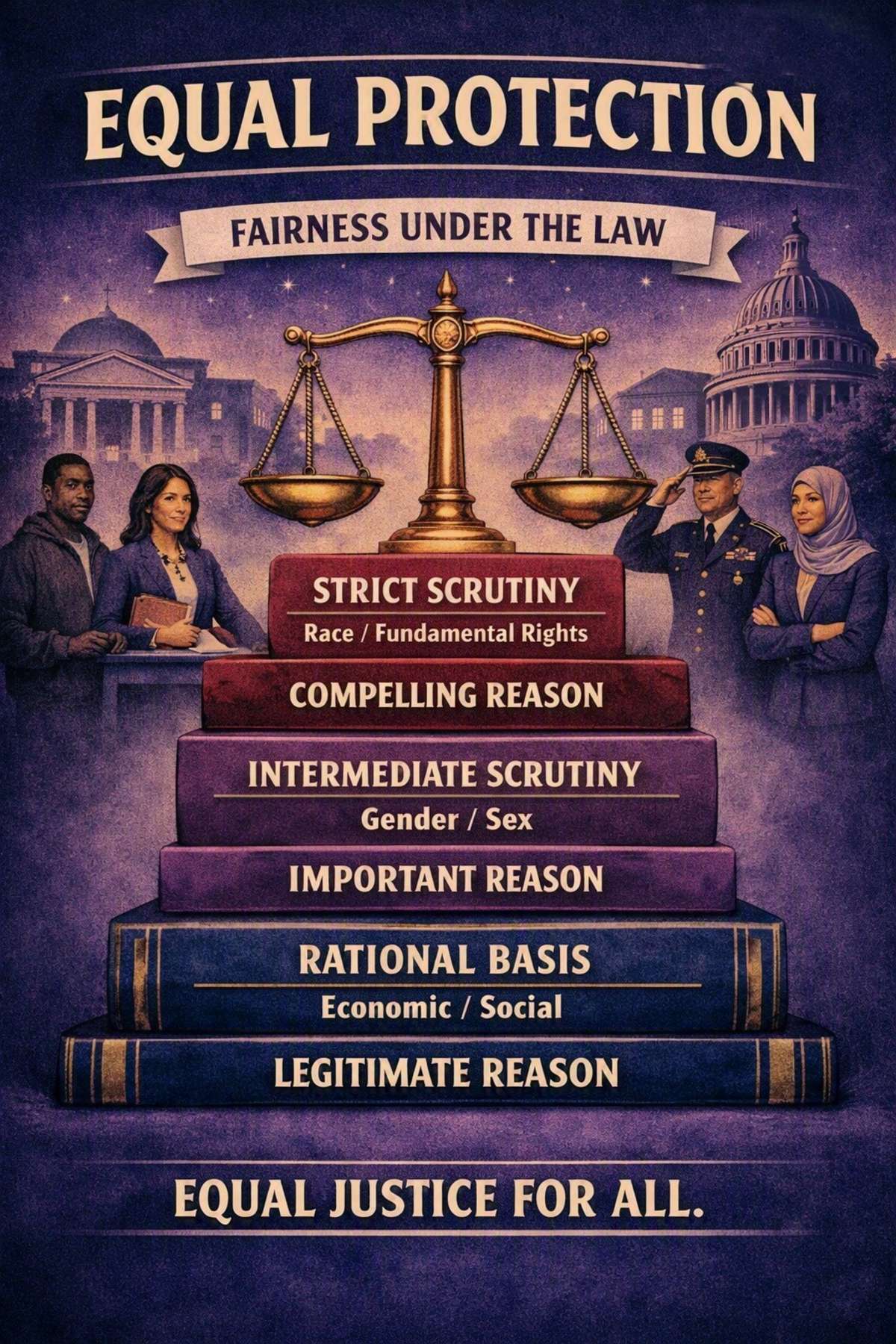
The Equal Protection Clause says the government must treat people equally under the law. It doesn't mean everyone is treated identically — it means the government can't play favorites or punish differences without a fair reason.
In plain words:
The government can't make rules that unfairly single people out.
Imagine:
Three students apply for a public-school scholarship - same grades, same needs, same efforts. But the school gives it only to the students from one neighborhood — because "that's where the board member live."
This is not equality.
This is favoritism.
The Constitution protects against this.
When the government treats groups differently, it must answer one question:
Is there a fair reason for the difference?
The fairness depends on who is being treated differently and why.
Example:
A city passes a law saying only homeowners can vote in local elections. Renters pay taxes, live in the same city, and care about the same issues — but they're excluded. That law treats two groups differently.
Equal Protection ask:
Is this fair?
If not, the Constitution says no.
Equal Protection matters because it protects against:
- unfair discrimination,
- favoritism,
- bias disguised as policy,
- and laws that divide instead of unite.
The Constitution ensures that justice belongs to everyone — not just a few.
Due Process protects fairness in how the government acts.
Equal Protection protects fairness in who the government protects.